Jan 14, 2026
Why Audio Is Replacing PDFs for Internal Enterprise Communication
Why Audio Is Replacing PDFs for Internal Enterprise Communication
Andy Suter
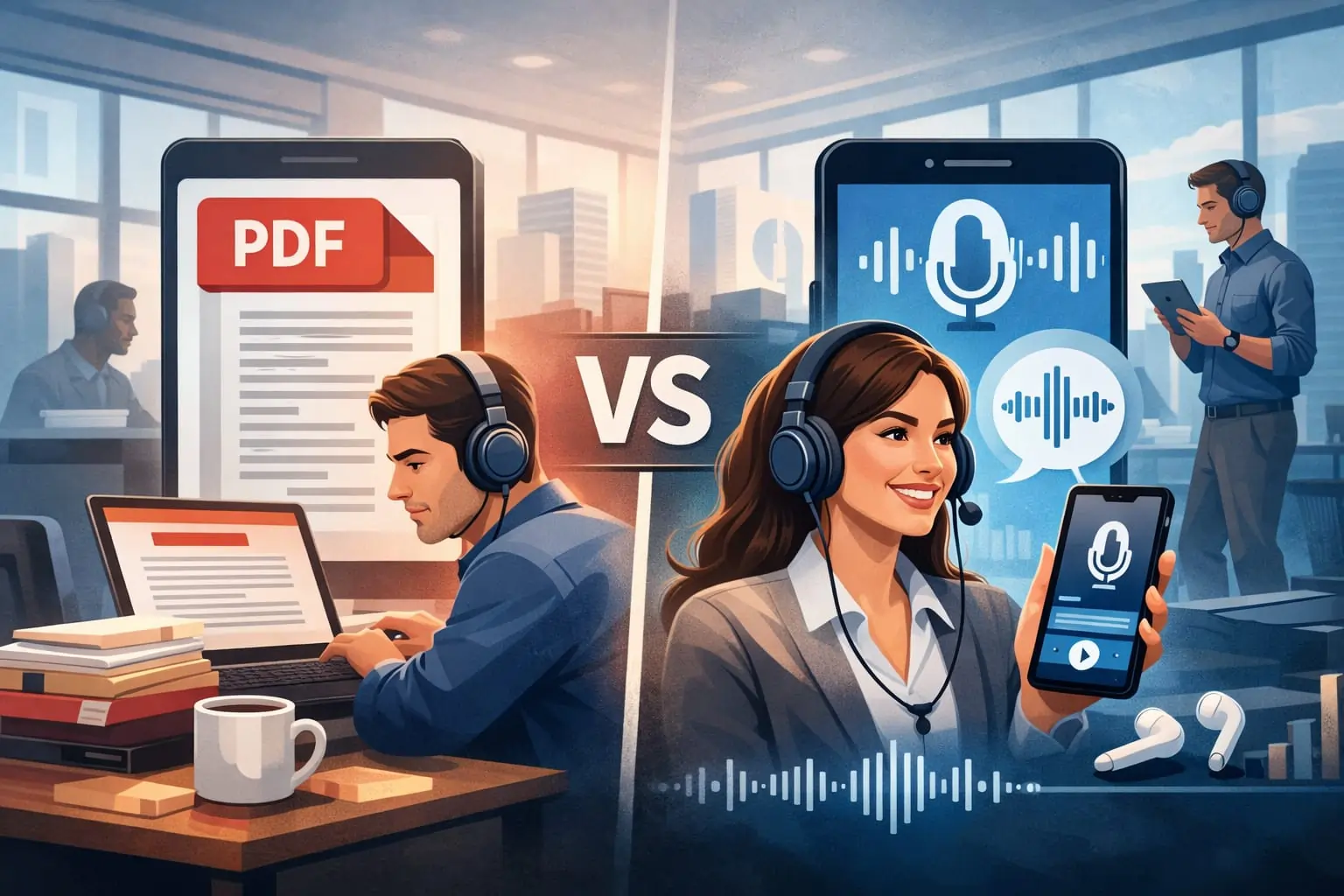
Discover why enterprises are shifting from PDFs to audio for internal communication. Learn how audio improves engagement, clarity, and employee understanding.
For many years, PDFs have been the standard format for internal enterprise communication. From company policies and training manuals to leadership updates and compliance documents, organizations relied heavily on text-heavy PDF files to share important information. PDFs were considered professional, easy to archive, and suitable for formal communication.
However, the modern workplace has changed dramatically. Teams are now distributed, workdays are faster, and employees are overwhelmed with information. In this environment, long PDFs are no longer effective as a communication tool. Employees often delay reading them, skim through them, or ignore them entirely.
This is why audio is increasingly replacing PDFs for internal enterprise communication. Not because PDFs are useless, but because the way people consume information at work has evolved.
The Problem with PDFs in Modern Workplaces
PDFs are static by nature. They are excellent for storing information, but when used for everyday communication, they often create friction instead of clarity.
Common challenges enterprises face with PDFs
Employees rarely read long PDFs from start to finish
Important updates get buried inside email attachments
Continuous reading causes screen fatigue
Frontline, field, and remote teams show low engagement
In many organizations, PDFs are shared with good intentions but poor results. Critical updates are misunderstood, policies are misinterpreted, and training content fails to create impact. The issue is not the quality of information—it is the format used to deliver it.
Why PDFs No Longer Match How Employees Work Today
Work habits have changed significantly in the last few years. Employees no longer have long, uninterrupted time blocks to read documents.
How modern work behavior conflicts with PDF-based communication
Employees juggle multiple tools and platforms daily
Remote and hybrid work has become common
Learning happens in short, focused moments
Attention spans are reduced due to constant notifications
PDFs demand full visual attention and dedicated reading time. This makes them difficult to fit into modern workflows. Audio, on the other hand, adapts naturally to how people work today.
How Audio Solves Internal Communication Gaps
Audio introduces flexibility into internal communication. Instead of asking employees to stop working and read documents, audio allows them to listen while continuing daily activities.
Key advantages of audio over PDFs
Information can be consumed hands-free
Listening improves attention and retention
Messages can be replayed for reinforcement
Tone and context are clearer through voice
Audio feels more conversational and human. When employees hear a message instead of reading it, they are more likely to engage with it fully and understand its intent.
Why Enterprises Are Moving Toward Audio-First Communication
Enterprise communication is no longer limited to office desks or fixed schedules. Teams are spread across locations, time zones, and roles.
Why audio fits modern enterprise environments
Works equally well for office, remote, and frontline teams
Reduces dependency on screens and dashboards
Delivers information faster than long documents
Scales easily across large organizations
By converting internal documents into audio, enterprises ensure that messages reach employees in a format they are more likely to consume and remember.
Common Internal Use Cases Where Audio Outperforms PDFs
Audio does not replace documentation completely. Instead, it performs better in situations where understanding and engagement matter more than formal structure.
Leadership communication
Hearing updates directly from leadership builds trust and creates a stronger emotional connection compared to reading written announcements.
Policy explanations
Policies often contain complex language. Audio helps explain the reasoning behind rules, making them easier to understand and follow.
Training reinforcement
Audio summaries allow employees to revisit key training points without rereading lengthy manuals.
Change communication
During organizational changes, audio reduces confusion by clearly explaining what is changing, why it is changing, and what employees should expect.
Audio vs PDF: A Practical Comparison for Enterprises
Aspect | Audio Communication | PDF Communication |
Engagement | High | Low to Medium |
Time Required | Low | High |
Accessibility | Strong | Limited |
Flexibility | High | Low |
Retention | Better | Inconsistent |
This comparison highlights why many enterprises now treat PDFs as reference material, while audio is used for communication and reinforcement.
Does Audio Replace PDFs Completely?
No, and it should not.
The balanced approach enterprises should follow
PDFs for compliance, structure, and official records
Audio for explanations, updates, and reinforcement
When used together, PDFs and audio create a communication system that is both formal and practical.
The Role of Audio in Remote and Hybrid Teams
Remote and hybrid teams often miss informal conversations that naturally happen in physical offices.
How audio helps distributed teams
Adds tone and emotion to messages
Makes communication feel more personal
Improves clarity and alignment across teams
Employees feel more connected when they hear messages rather than reading impersonal text. This improves trust and reduces misunderstandings.
Challenges of Audio-Based Communication
Audio communication also has limitations and must be used thoughtfully.
Common challenges
Not suitable for highly visual or technical information
Risk of information overload if audio is too long
How enterprises can solve these challenges
Keep audio messages short and focused (5–15 minutes)
Use audio for explanations, not raw data
Support audio with written summaries and references
Best Practices for Using Audio in Internal Communication
To make audio effective, enterprises should follow simple best practices:
Break long content into smaller audio segments
Use clear, conversational language
Focus on one topic per audio message
Combine audio with PDFs for reference
Update audio regularly to keep it relevant
These practices ensure audio adds value instead of noise.
Final Thoughts
Audio is replacing PDFs for internal enterprise communication because work itself has changed. Employees are busy, distributed, and overloaded with information. They need communication that fits naturally into their daily routines.
PDFs are still important, but they are no longer enough on their own. By adding audio to internal communication strategies, enterprises make information easier to consume, understand, and remember.
In today’s workplace, audio is not just an option- it is becoming essential.
Frequently Asked Questions (FAQs)
Is audio better than PDFs for internal enterprise communication?
Audio is more effective for updates and explanations because employees are more likely to listen than read long PDFs. PDFs still work well as reference documents.
Should enterprises completely stop using PDFs?
No. PDFs are still important for compliance and documentation. Audio should be used alongside PDFs, not as a replacement.
What type of internal communication works best in audio format?
Leadership updates, policy explanations, training reinforcement, and change communication work best in audio format.
Is audio communication suitable for remote and hybrid teams?
Yes. Audio helps remote teams stay aligned by adding tone, clarity, and a more human touch to internal messages.
How long should internal audio messages be?
Short audio messages between 5 and 15 minutes are ideal for maintaining attention and retention.