Dec 31, 2025
Enterprise Audio Briefings for Modern Internal Communication
Enterprise Audio Briefings- Replacing Long Emails and PDFs in Modern Organizations
Andy Suter
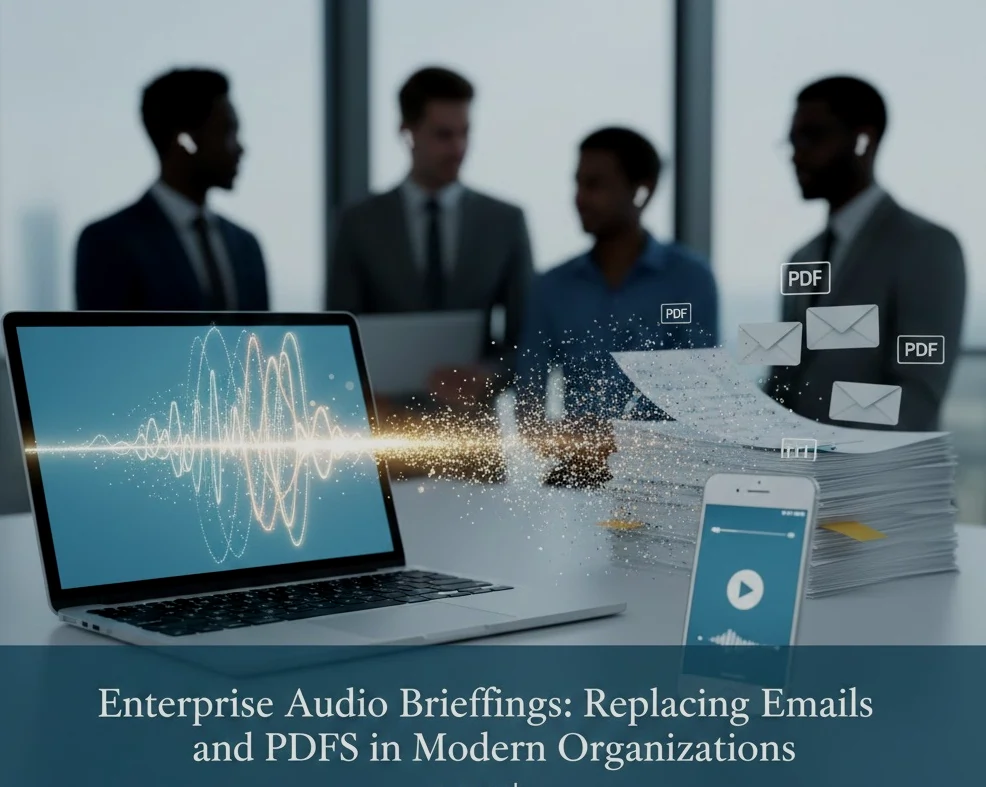
Discover how enterprise audio briefings replace long emails and PDFs, reducing information overload and improving engagement in modern organizations.
Enterprises today generate more written content than ever before. Emails, PDFs, reports, presentations, policy documents, and internal memos are created daily to keep teams aligned and informed. While this approach worked in the past, it is increasingly ineffective in modern workplaces. Employees are overwhelmed by information, inboxes are overcrowded, and long documents often go unread.
As a result, many organizations are rethinking how they share critical information. One solution gaining momentum is enterprise audio briefings-a format designed to replace long emails and dense PDFs with short, focused audio updates that fit naturally into busy workdays.
The Growing Problem of Information Overload
Most professionals start their day by checking email, only to find dozens of unread messages waiting. Important updates are buried among meeting invites, newsletters, and automated notifications. Even when emails contain critical information, long paragraphs and attached PDFs discourage thorough reading.
Common challenges enterprises face with traditional communication include-
Low engagement with long-form emails
Important details missed due to skimming
Delayed responses caused by unread documents
Excessive time spent reading instead of acting
Misalignment across teams and departments
In fast-moving organizations, these issues can slow decision-making and reduce productivity.
Why PDFs and Emails Are No Longer Enough
PDFs and email attachments are static by nature. They demand focused attention, uninterrupted time, and a screen-resources that many employees simply don’t have. In remote and hybrid work environments, teams operate across time zones, making synchronous communication even more difficult.
Additionally, written communication lacks tone and emphasis. Key messages can get lost in walls of text, leading to misunderstandings or incomplete knowledge transfer. Enterprises need a format that is flexible, engaging, and easy to consume without demanding extra effort.
What Are Enterprise Audio Briefings?
Enterprise audio briefings are short, structured audio summaries created from written content such as emails, reports, presentations, or internal documents. Instead of reading through multiple pages, employees can listen to a concise 5–10 minute audio update that highlights what matters most.
These briefings are often distributed through private, secure channels, similar to internal podcasts. Employees can access them on mobile devices or desktops, making information available whenever and wherever it’s needed.
Why Audio Fits Modern Workflows
Audio is already part of everyday life. People listen to podcasts, voice notes, and audiobooks during commutes, workouts, or breaks. Enterprise audio briefings apply this same behavior to workplace communication.
Key advantages of audio include-
Hands-free consumption- No screen required
Time efficiency- Listen while multitasking
Higher engagement- Audio feels more personal than text
Better retention- Spoken information is often remembered more clearly
By integrating audio into internal communication, organizations meet employees where they already are.
The Role of AI in Creating Audio Briefings
AI has made enterprise audio briefings scalable. Written documents can be quickly structured, summarized, and converted into natural-sounding audio without manual recording. This removes the need for microphones, studios, or lengthy production cycles.
Advanced AI audio platforms go a step further by allowing human review and validation. This ensures that the audio remains accurate, contextually correct, and aligned with organizational standards- an important requirement for enterprise use.
This combination of Automation and oversight allows companies to move fast without sacrificing trust.
Replacing Long Emails with Audio Updates
Instead of sending another long email that risks being ignored, leadership teams can share a short audio briefing summarizing key points. Employees can listen at their convenience, reducing inbox clutter and improving message reach.
Audio briefings are especially effective for-
Leadership announcements
Strategy updates
Company-wide changes
Quarterly or monthly summaries
When messages are easier to consume, they are more likely to be understood and remembered.
Reducing Dependence on PDFs and Slide Decks
PDFs and presentations are often created for documentation, but they are not always ideal for communication. Enterprise audio briefings allow organizations to extract insights from these documents and deliver them in a more engaging format.
Instead of asking employees to read a 30-page report, a validated audio summary can communicate the key takeaways in minutes. Those who need deeper details can still access the original document, while others stay informed without unnecessary effort.
Key Use Cases Across the Enterprise
Enterprise audio briefings are being used in a wide range of scenarios, including-
Executive and leadership communication
Internal knowledge sharing
Policy and compliance updates
Onboarding and training summaries
Project and department updates
For distributed teams, audio ensures consistent messaging without requiring additional meetings.
Security, Compliance, and Trust
For enterprises, security and accuracy are non-negotiable. Audio briefings often contain sensitive information, making secure access and controlled distribution essential. Platforms designed for enterprise use provide private feeds, access control, and auditability.
Some platforms, such as Sprep, focus on converting internal documents into validated, private audio briefings, ensuring that content is reviewed before distribution. This approach reduces risk while maintaining speed and efficiency.
Measuring Engagement and Effectiveness
Unlike traditional emails, enterprise audio platforms can provide insights into listener engagement. Organizations can see which briefings are being listened to, how long employees stay engaged, and which topics resonate most.
These insights help communication teams refine their strategy, focus on what works, and continuously improve internal messaging.
The Future of Enterprise Communication
As work environments continue to evolve, enterprises will need communication formats that are flexible, scalable, and human-centric. Long emails and dense PDFs will still exist, but they will no longer be the primary way information is shared.
Enterprise audio briefings represent a shift toward communication that respects attention, reduces overload, and improves clarity. By transforming written content into concise audio, organizations can ensure that important messages are not just sent-but actually heard.
Conclusion
Enterprise audio briefings are not about replacing documents entirely; they are about using the right format for the right purpose. By replacing long emails and PDFs with short, validated audio updates, organizations can improve engagement, alignment, and productivity.